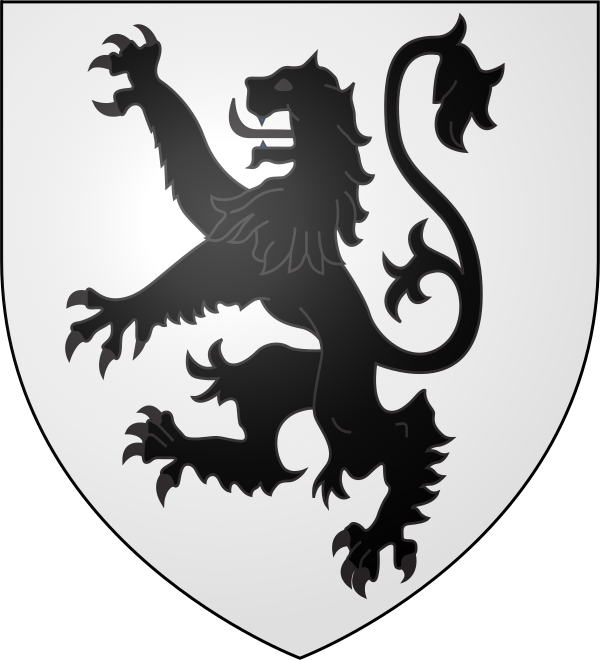
(King of Sweden) Gustav I VASA #66662
12 MAY 1496 - 29 SEP 1560
AKA: Gustav Vasa
TITLE King of Sweden-
BIRTH 12 MAY 1496, Österåker, Stockholm, Sweden
DEATH 29 SEP 1560, Stockholm, Sweden
Historical Notes
Founder of the House of Vasa
Gustav Eriksson Vasa (12 May 1496 - 29 September 1560), also known as Gustav I, was King of Sweden from 1523 until his death in 1560. He was previously self-recognised Protector of the Realm (Riksföreståndare) from 1521, during the ongoing Swedish War of Liberation against King Christian II of Denmark, Norway and Sweden. Gustav rose to lead the Swedish War of Liberation following the Stockholm Bloodbath, where his father was executed. Gustav's election as king on 6 June 1523 (the National Day of Sweden) and his triumphant entry into Stockholm eleven days later marked Sweden's final secession from the Kalmar Union.
Early life
Gustav Eriksson, a son of Cecilia Månsdotter Eka and Erik Johansson Vasa, was probably born in 1496. The birth most likely took place in Rydboholm Castle, northeast of Stockholm, the manor house of the father, Erik. The newborn got his name, Gustav, from Erik's grandfather Gustav Anundsson.
Erik Johansson's parents were Johan Kristersson and Birgitta Gustafsdotter of the dynasties Vasa and Sture respectively, both dynasties of high nobility. Birgitta Gustafsdotter was the sister of Sten Sture the Elder, regent of Sweden, and their mother was a half-sister of King Charles VIII of Sweden. Being a relative and ally of uncle Sten Sture, Erik inherited the regent's estates in Uppland and Södermanland when the latter died in 1503. Although a member of a family with considerable properties since childhood, Gustav Eriksson would later be the holder of possessions of a much greater dimension.
Both of Gustav's parents descended from Gregers, the illegitimate son of Birger Jarl; Gustav's father descended from Gregers through his maternal great-grandmother Margareta Karlsdotter, while Gustav's mother descended from him through her father Magnus Karlsson Eka. Additionally, Birgitta Gustafsdotter and Sten Sture (and consequently also Gustav) descended from King Sverker II of Sweden through King Sverker's granddaughter Benedikte Sunesdotter (who was married to Svantepolk Knutsson, son of Duke of Reval).
Death
In the late 1550s, Gustav's health declined. When his grave was opened in 1945, an examination of his corpse revealed that he had suffered chronic infections of a leg and in his jaw.
Gustav gave a so-called "last speech" in 1560 to the chancellors, his children and other noblemen, whereby he encouraged them to remain united. On 29 September 1560, Gustav died and was buried (together with three of his wives, while only two are engraved) in the Cathedral of Uppsala.
Gustav Eriksson Vasa (12 May 1496 - 29 September 1560), also known as Gustav I, was King of Sweden from 1523 until his death in 1560. He was previously self-recognised Protector of the Realm (Riksföreståndare) from 1521, during the ongoing Swedish War of Liberation against King Christian II of Denmark, Norway and Sweden. Gustav rose to lead the Swedish War of Liberation following the Stockholm Bloodbath, where his father was executed. Gustav's election as king on 6 June 1523 (the National Day of Sweden) and his triumphant entry into Stockholm eleven days later marked Sweden's final secession from the Kalmar Union.
Early life
Gustav Eriksson, a son of Cecilia Månsdotter Eka and Erik Johansson Vasa, was probably born in 1496. The birth most likely took place in Rydboholm Castle, northeast of Stockholm, the manor house of the father, Erik. The newborn got his name, Gustav, from Erik's grandfather Gustav Anundsson.
Erik Johansson's parents were Johan Kristersson and Birgitta Gustafsdotter of the dynasties Vasa and Sture respectively, both dynasties of high nobility. Birgitta Gustafsdotter was the sister of Sten Sture the Elder, regent of Sweden, and their mother was a half-sister of King Charles VIII of Sweden. Being a relative and ally of uncle Sten Sture, Erik inherited the regent's estates in Uppland and Södermanland when the latter died in 1503. Although a member of a family with considerable properties since childhood, Gustav Eriksson would later be the holder of possessions of a much greater dimension.
Both of Gustav's parents descended from Gregers, the illegitimate son of Birger Jarl; Gustav's father descended from Gregers through his maternal great-grandmother Margareta Karlsdotter, while Gustav's mother descended from him through her father Magnus Karlsson Eka. Additionally, Birgitta Gustafsdotter and Sten Sture (and consequently also Gustav) descended from King Sverker II of Sweden through King Sverker's granddaughter Benedikte Sunesdotter (who was married to Svantepolk Knutsson, son of Duke of Reval).
Death
In the late 1550s, Gustav's health declined. When his grave was opened in 1945, an examination of his corpse revealed that he had suffered chronic infections of a leg and in his jaw.
Gustav gave a so-called "last speech" in 1560 to the chancellors, his children and other noblemen, whereby he encouraged them to remain united. On 29 September 1560, Gustav died and was buried (together with three of his wives, while only two are engraved) in the Cathedral of Uppsala.